
Burning hot refiners
We’ve been swamped in earnings for the last few weeks. And oh boy, some earnings releases were tough. Are companies moving 20% up or down more frequently, or are we just getting old and a 20% down move hurts more than it used to?
One standout strong performer has been refiners, a theme we wrote up in late 2025 and revisited in February of this year, just before Trump and the Iranians lit a fire under this trade.
We’ve held off on detailed commentary, but with every refiner releasing a market update during Q2 earnings, we have enough data points to go by.
In short, crack spreads are burning hot right now.

Depending on which CEO you listen to, around 5-7m bpd of refining capacity is currently offline, excluding normal maintenance downtime. US gasoline inventories are well below their 5-year range, and distillates are at the bottom of their 5-year range. US refiners are running flat out, deferring maintenance for as long as possible to cash in on the current bonanza.
Even if all that disrupted capacity magically came back online tomorrow, product inventories would take considerable time to rebuild. Management commentary suggests tight refining markets could persist well into 2027.

Our original thesis started as a long-term supply-demand imbalance, driven by continued demand for refined products and a new construction pipeline that’s falling off a cliff starting this year.
We got lucky when Maduro got arrested, and Venezuela was forced to start pumping barrels instead of revolutionary slogans. Venezuelan heavy sour crude typically trades at a discount to light sweet crude, and Venezuela is much closer to the US than the Middle East, cutting shipping costs for Gulf Coast refiners.
Then we got lucky when Iran and Ukraine showed that in modern warfare, a couple of $30k drones can knock down parts of a $30 billion refinery complex.
Or did we? We have learned over the years that in commodities with volatile demand and strong seasonality, a bull market shows itself as multiple price spikes, all deemed to be temporary and unrelated.
Remember Kuppy’s enthusiasm on oil tankers ahead of IMO2020, when stricter environmental regulation was about to tighten supply in various shipping sectors? Only 4 months later, the trade had shifted to an oil-contango trade as ships were used to store excess production during Covid. 2 years later, tankers were printing money as the Ukraine-Russia war diverted trade lanes.
Demand spikes for different reasons. But the real reason behind higher prices is the persistent lack of supply – something where you have visibility years into the future.
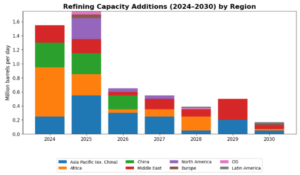
Figure: The thesis in 1 graph. Source: BloombergNEF, company announcements
Similarly, we expect this bull market to ebb and flow. Some real risks could ruin our party, at least temporarily.
For starters, China restarting refined-products exports is a major wildcard risk to cracks. Watch Singapore Crack spreads. Once they give, you know that China is a seller. China’s independent teapot refiners account for roughly 25% of Chinese refining capacity. Yet, Shandong teapots were running at around 50% utilization in May, leaving plenty of theoretical spare capacity sitting around waiting to ruin the party.
There is also 10-15 million bpd of crude trapped behind Hormuz. For now, strategic reserves are making up the shortfall. But what happens if that runs out? Crude prices will spike to the point where we see at least 10m bpd of demand destruction.
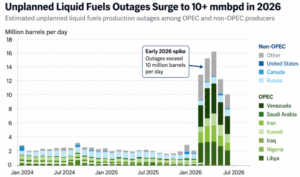
Source: US EIA, short-term energy outlook August 2026 (h/t Josh Young)
Bio Diesel
While our crack spreads are making new highs, we must recognize that more of this is eaten up by environmental compliance. US refiners must blend renewable fuels such as biodiesel into the fuel pool. If they don’t blend themselves enough, they must buy RIN credits from someone who does.
After a period of RIN oversupply, the EPA recently increased the amount of renewable fuel that must be blended, while biodiesel production has been slow to respond. More required RINs chasing limited supply has pushed RIN prices sharply higher, roughly doubling since the start of the year.
In practice, that means at least $10 of the higher crack spread gets handed straight back through higher compliance costs.
Of course, renewable diesel producers are on the receiving end of those higher RIN prices.
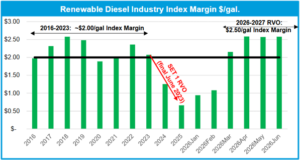
Figure: Renewable Diesel Margins are recovering during RVO2. Source: Calumet Investor Presentation
To be profitable, renewable diesel currently relies on 3 forms of subsidy: the RIN system, the 45Z clean fuel production credit, and often the California Low Carbon Fuel Standard credit.
We have always shied away from renewable diesel and ethanol. Any industry that needs three separate government programs to explain the gross margin tends to make us nervous.

The concept of turning waste oils into useful products makes plenty of sense, even if some subsidies are required to scale the industry. The economics get a little harder to love when we run out of waste oil and start growing soybeans to turn into diesel while simultaneously subsidizing every step of the journey. At that point, renewable diesel starts looking suspiciously like an agricultural subsidy.
Regardless, renewable diesel producers such as Neste (NESTE FH) or Calumet (CLMT) will be making a lot more money than they did in the last 2 years.
California love
Let’s talk about California, where the refining shortage gets particularly ugly. The state has lost roughly 17% of its refining capacity from the Phillips 66 Los Angeles closure and Valero’s 145 kbpd Benicia shutdown.
Unfortunately, California drivers neglected to retire 17% of their cars in solidarity.
California was already structurally short and dependent on imports. PBF estimates the state imports roughly 250 kbpd of gasoline, close to one-third of demand, plus meaningful jet fuel volumes.
The problem is that California is effectively an energy island. Its unique fuel specifications and limited pipeline connections make replacing a lost California barrel much harder than replacing one in Texas. The marginal barrel increasingly needs to arrive by ship, precisely when global product markets are tight, and everyone else is bidding for the same barrel.
In other words, California spent years shrinking its refining system on the assumption that imports would always be there. That assumption is currently getting a rather expensive stress test.
PBF Energy (PBF) recently returned its West Coast-based Martinez refinery to full operations after a major fire knocked out part of the refinery last year. Together with its Torrance refinery, about 1/3 of its capacity is California-based.

Lubricants
Finally, we should have paid more attention in March when our friends told us what a Hormuz closure would mean for sulfur prices. How could an almost worthless by-product that costs more to remove from crude oil than it is worth to a buyer ever be so scarce that it’s valuable?
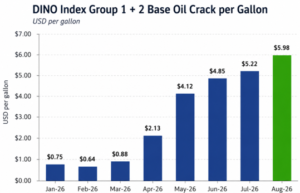
So when people repeatedly tell us to look into the base oil shortage, we are paying close attention. 10% of global paraffinic base-oil capacity is offline, including roughly 1/3 of Middle Eastern capacity.
Prices are skyrocketing…
Admittedly, we should have paid closer attention in chemistry class to what each of those base oils does. Still, it suffices to say that a long list of petroleum-based lubricants is subdivided into Group 1, 2, or 3 depending on how refined they are.
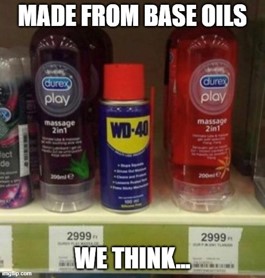
What is traditionally an industry always oversupplied by either China or the Middle East is suddenly an industry experiencing a bonanza that puts ordinary crack spreads or renewable diesel margins to shame.
While these are commodities, they aren’t commoditized enough to have an easy-to-display price index. We don’t know how high base oil margins have risen for US producers such as HF Sinclair (DINO) and Calumet (CLMT). We also don’t know how much lag these prices will show up in their earnings. We just know margins are at all-time highs, and those companies are printing money on a business that, until today, was mostly ignored by investors.
h/t @Zerosumgame33
Conclusion
In short, while we think we are in a multi-year bull market for refiners, we realize that crack spreads will ebb and flow, and we are clearly at a moment of overearning. We own a diversified basket of refiners, but whenever we see excess earnings and don’t know how long they will last, we often gravitate toward the most levered shitcos we can find.
They don’t just provide the most torque to our thesis… if an overleveraged company can use 2 quarters with excess earnings to pay down all its debt, even a temporary windfall can be transformative.
We have added torqued names such as PBF Energy (PBF) and Calumet (CLMT) to our diversified basket of refiners, knowing that these are exactly the kind of levered shitcos that might get a second shot at being a respectable refiner with a clean balance sheet, if only the current bonanza lasts for another 1 or 2 quarters.
Conveniently, those names give plenty of exposure to the above-mentioned renewable diesel and base oil margins, as well as the California shortage.
Every drone that either Russia or the GCC fails to intercept adds another round to the party.