
Theme of the Week
What are IPO Unlocks?

Kliff Note of the Week
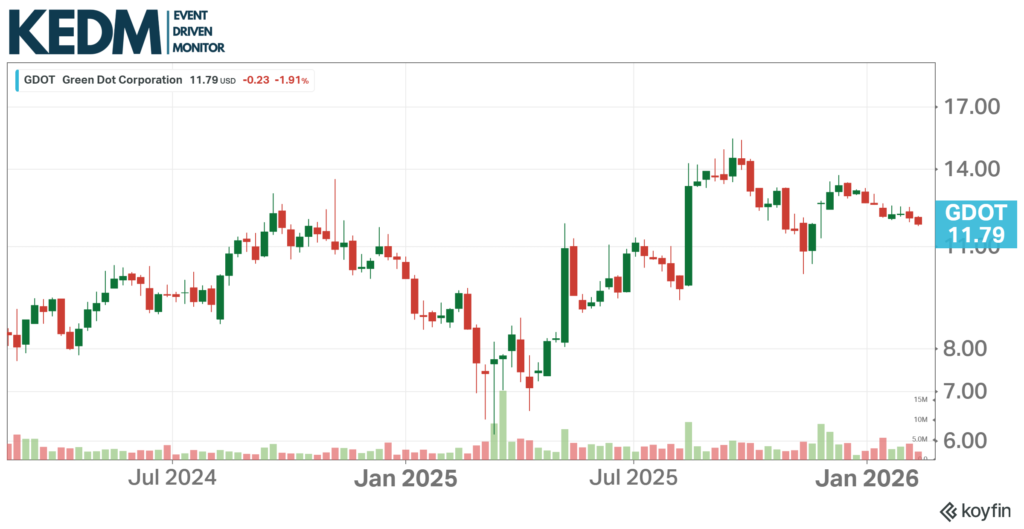
Spin-off Monitor: A reminder that Green Dot (GDOT) decided (under pressure from activists) to split itself in two, selling its fintech business to Smith Ventures for $690m while combining Green Dot Bank with CommerceOne to form a new publicly traded bank holding company.
The deal basically separates the fintech engine from the bank charter (long seen as a drag on potential buyers) and gives the fintech a dedicated issuing-bank partner under a seven-year exclusivity agreement.
The new company is going for the Business-aaS market, where peers trade at a much higher valuation vs implied for this deal. Quite an interesting situation, and GDOT has provided more info in the meantime. The transactions are expected to close in Q2 2026.
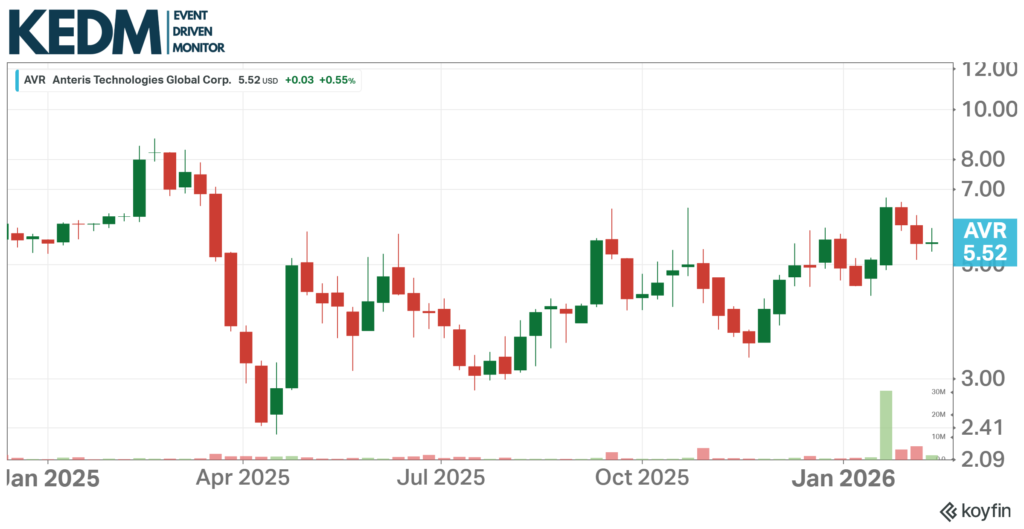
Priced Secondaries Monitor: Anteris Technologies (AVR) announced a $200m capital raise, anchored by a $90m strategic investment from Medtronic for up to a 19.9% stake. The company is developing a novel transcatheter aortic valve.
While clinical outcomes remain to be proven, Medtronic’s investment offers strong external validation of the technology and provides the capital needed to advance development in a large and growing structural heart market.
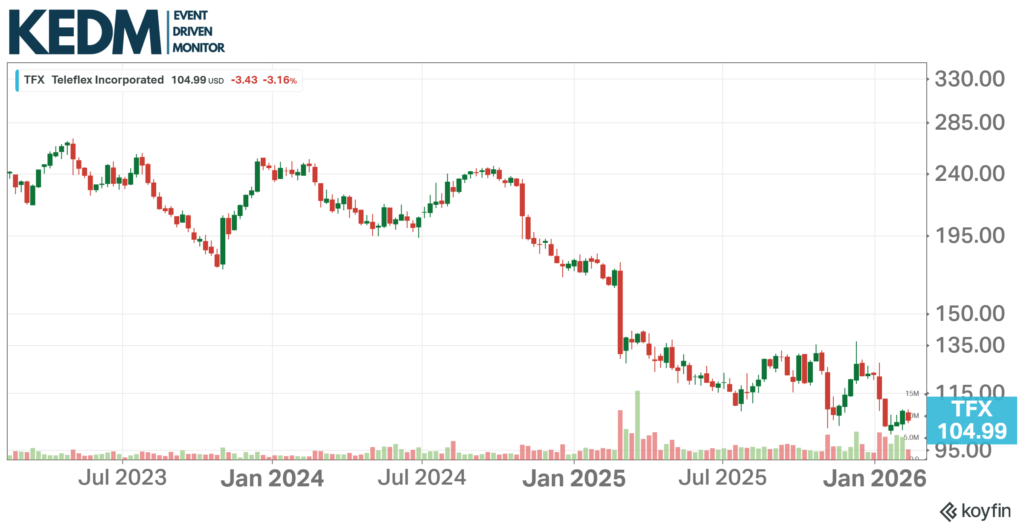
CEO Turnover Monitor: Teleflex (TFX) is another one that we flagged very recently: decade-long lows on poor earnings, CEO out, recently sold assets for $1.8bn in net proceeds (~37% of the current market cap). We did some digging.
Most of the guidance cut is tied to businesses they divested, and the remaining business screens pretty cheap: on 2027 earnings, it’s trading at roughly half the multiple of similar med‑tech peers, with a much cleaner balance sheet and ~$1bn buyback.
And when you look at how aggressively lenders are financing other deals in the space (like Hologic’s LBO), it’s clear there’s a huge credit appetite for these types of assets.
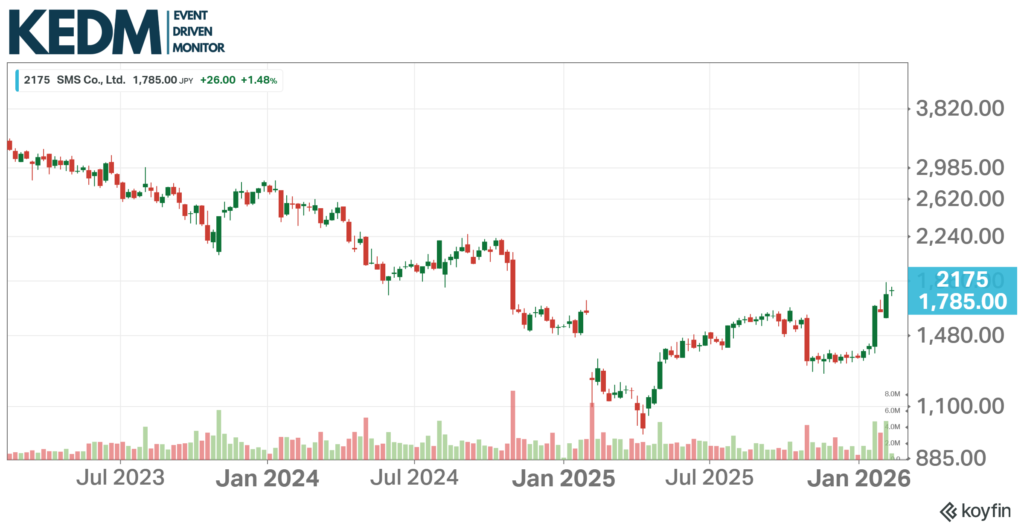
13D Monitor: Oasis Management showed up at SMS (2175 JT), reporting a 7.8% stake and disclosing that they may take ‘significant action in order to protect shareholder value’. While the shares popped 17% on the news, they are back at a level a few months ago and still massively below levels from a few years ago.
Despite strong and steady topline growth and roughly 90% gross margins, this software company has not been able to expand operating margins. That, combined with a low dd EV/EBITDA multiple and exposure to LT tailwinds (elderly care), is why Oasis is interested.
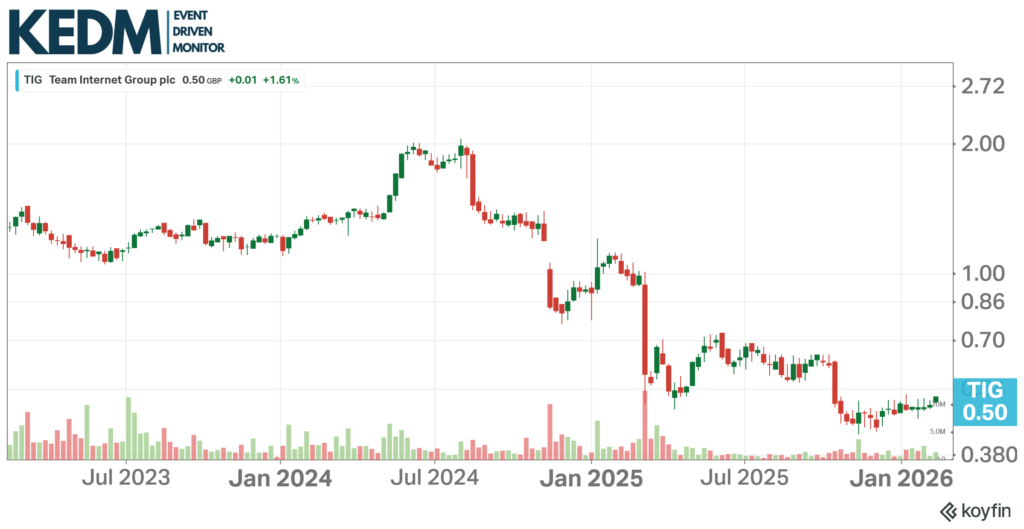
Strategic Alternatives Monitor: It’s a bit small and illiquid, but there’s certainly a catalyst on the horizon. Team Internet (TIG) (the old Centralvic) recently launched a strategic review to unlock its SOTP, mentioning it has received ‘multiple approaches’ for various parts of the business.
TIG recently provided an update, mentioning that discussions for its Domains, Identity & Software arm are progressing well and that ‘this segment alone could be worth more than the group’s entire current market value’.
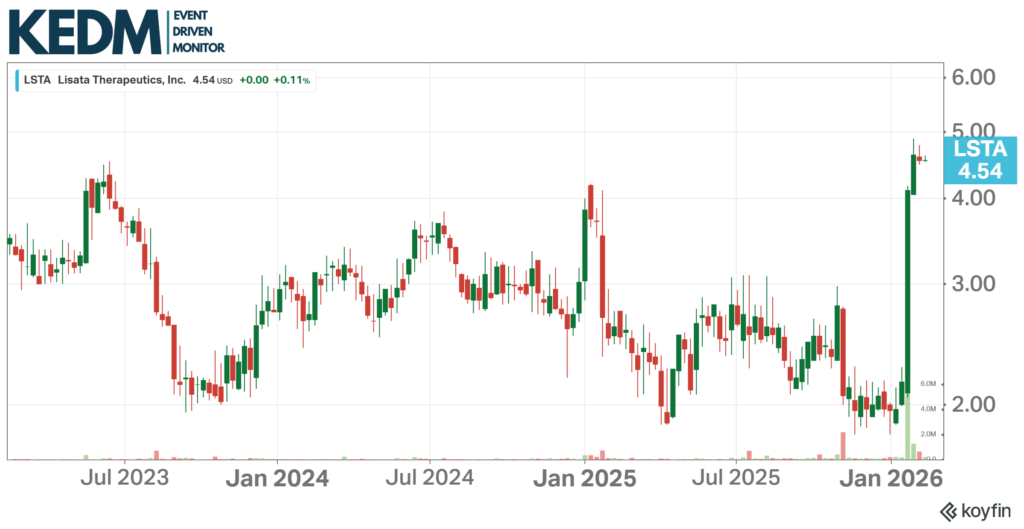
CVR Monitor: Kuva Labs is offering $4.00 per share in cash for Lisata Therapeutics (LSTA), and two CVRs that could add another $2.00 if certain milestones are hit.
The milestones relate to rights for certepetide in China and, eventually, to regulatory approval in a country worldwide. No idea, but at $4.08, you’re not paying much for the CVRs.
KEDM Event Driven Monitor scans over 20 corporate events for market moving information and distills them into our propietary “Kliff Notes.” One profitable trade should more than cover an annual subscription and access to the Event Driven chatroom!