
Theme of the Week


Kliff Note of the Week
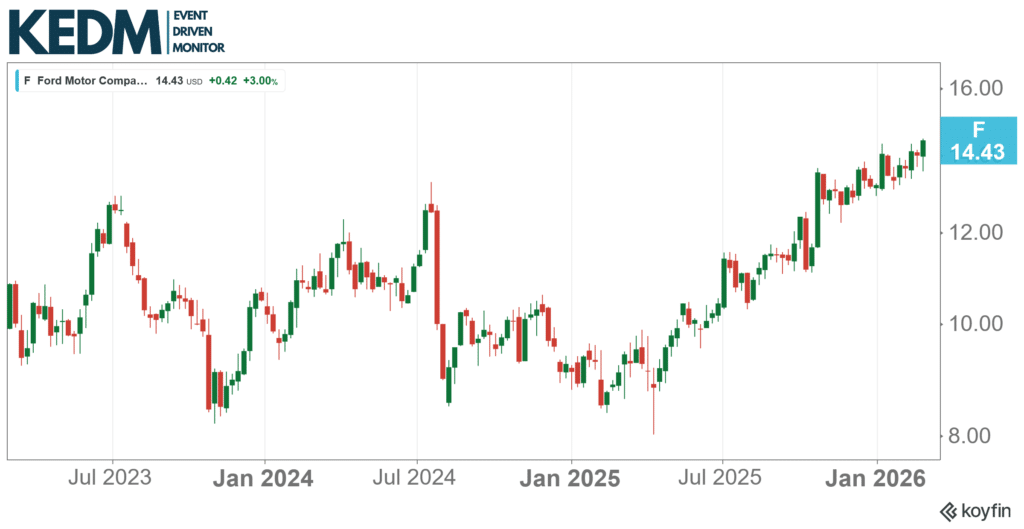
Inflection Monitor: Trump’s EPA terminates Obama’s 2009 “endangerment finding” declaration, which determined that CO₂ and other greenhouse gases endanger public health and welfare and provided the legal basis for regulating greenhouse gas emissions under the Clean Air Act.
This is the ruling that Ford (F) and General Motors (GM) were waiting for, and which we highlighted in last year’s automotive write-up.
Spin-off Monitor: An Indian $29bn market-cap, diversified natural resources and energy group, Vedanta (VEDL IN), updated on the demerger. The company is in the process of demerging into five specific commodity companies to basically eliminate conglomerate discount.
The listing of the entities is planned for this March, and each shareholder will receive 1 share in each listed entity. The main business units are cyclical, yet the company as a group has had strong profitability. Worth looking at.

Newsletter Short Monitor: Solvay (SOLB BB) has clear short-term potential in our view. It’s still holding up decently in bad markets, but that’s mainly due to its 8.5% dividend.
End markets remain horrible, and 2026 is going to be another challenging year. We don’t think that the company’s cash generation will be sufficient to sustain its dividend.
The upcoming FY results might make for a good moment to cut it, but that would not be well received by the market.

13D Monitor: Capital Federal Financial (CFFN) is being targeted by HoldCo AM, which wants improved capital returns. A good moment to go active, as Capitol Federal is finally showing some real signs of life.
Good recent EPS growth on rising interest income, falling funding costs, and a steadily improving net interest margin. Deposit growth is picking up (mainly commercial deposits), efficiency is improving, non‑interest income is growing, and CFFN is still doing buybacks below book value.
Yes, it’s still a low‑ROE, mortgage‑heavy regional bank, but the trend seems to have turned. 0.94x BV and ~11x P/E.

M&A Monitor: UniFirst (UNF) is once again in play as Cintas recently renewed its long‑running effort to buy the company. UniFirst confirmed it is now actively reviewing Cintas’ latest $275 p/s offer.
While the Croatti family’s control and dual‑class structure mean nothing can happen without their approval, Cintas has been pushing for years, and the current discussions feel more serious than past attempts.
We might see an offer of >$275 p/s, which, honestly, would be a good deal.

Other Interesting ED Action: ICON Plc (ICLR) traded down 40% after reporting the results of an internal investigation into its accounting practices, which could lead to a 2% restatement of revenue.
The earnings impact is likely larger than 2% (10% of EBITDA if you assume a 100% drop through margin), but this feels like an overreaction. The $9bn EV is now well below the $12bn they paid for PRA only 4 years ago.
CROs are seen as potential AI losers by the market, so buyer beware.

KEDM Event Driven Monitor scans over 20 corporate events for market moving information and distills them into our propietary “Kliff Notes.” One profitable trade should more than cover an annual subscription and access to the Event Driven chatroom!