
The AI discussion: hardware vs software
There is no escaping the AI discussion. The value bros have turned into software investors, and the momentum investors are balls deep into the hardware trade. To each their own. We’re listing the most interesting calls on each side.
Workiva (WK) (mkt cap $4.3bn · 19% below its 52-week high)
Mediation Capital has been buying application software at 2–3x sales after 105 expert calls, arguing infrastructure and cybersecurity have already repriced as AI winners while application names have not. It describes Workiva as the near-monopoly platform for SEC reporting: 95% of the Fortune 100, 89% of the S&P 500, an estimated ~50% of US filers and ~85% of filer market capitalization.
Accenture (ACN) (mkt cap $115bn · 35% below its 52-week high)
Penn Davis McFarland bought ACN at 9x earnings, believing AI chokepoint names are temporary and that enterprise adoption follows the internet’s slow curve rather than investors’ torrid timeline. Penn Davis said, “With a dividend yield over 5%, we get paid to wait. If our thesis is correct and AI creates a large wave of implementation opportunities, the shares should do extremely well.”
GitLab (GTLB) (mkt cap $7.6bn · 14% below its 52-week high)
Warden Capital holds GitLab as its largest position: “as AI accelerates code production, the control, review and approval of that code — where Git sits — becomes more critical, not less. It also sees the company as a cheap acquisition target. The market cap is a mere ~$5.5B (and $4.2B EV after cash), a drop in the bucket against the trillion-dollar-plus valuations in play elsewhere. GitLab serves a whopping 50% of the F100 and would be a really valuable distribution tool.”
Tencent (700 HK) (mkt cap HK$4,082bn · 34% below its 52-week high)
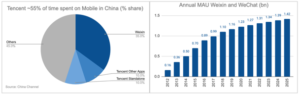
Vision Capital argues Tencent is wrongly written off as an AI loser — China’s most dominant and embedded internet company, with moats that reinforce one another: network effects, high switching costs, massive scale, a traffic dividend for every new venture, and cornered resources in gaming IP, proprietary data, and licenses. Rivals compete with pieces of Tencent. None competes with the whole. KEDM put Tencent in its Fallen Angel monitor a while back.
SK Hynix (000660 KS) (mkt cap ₩1,188tn · 3M −28.2% · YTD +147% · 44% below its 52-week high)
SK Hynix keeps turning up among value investors — is the Korea discount over now that IBKR allows trading?
Van Der Mandele Arar puts the bull case in relative terms: “We’d rather own a leading-edge microchip company trading at 4x forward earnings that Nvidia is dependent on to produce technologically superior processors.”
Minotaur, at roughly 3x 2027 earnings, reads the July correction as flow-driven rather than fundamentals — Korean retail margin debt unwinding from a record ₩38.6 trillion. AGT Partners bought near the bottom of the earnings cycle at a single-digit P/E. Third Point names it its top winner for the quarter, and Deep Sail opened it in Q2, funded by selling Micron.
Celestica (CLS) (mkt cap $34bn · 3M −22.2% · YTD +1.4% · 37% below its 52-week high)
Deep Sail initiated CLS in Q2 and holds it as its largest conviction: after canvassing the whole space, it sees Celestica as the cheapest way to own the AI data-center build-out, with structural margin expansion and design wins secured in 1.6T and co-packaged optics. Deep Sail puts at least three years of runway on the build-out.
Dell Technologies (DELL) (mkt cap $311bn · 3M +11.0% · YTD +271% · 9% below its 52-week high)
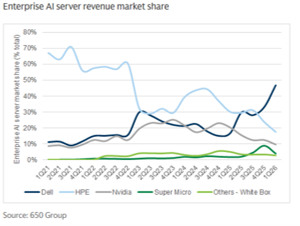
Adestella holds Dell as its largest position, arguing that agentic AI token costs push routine inference back on-premise, onto Dell servers. “AI-optimized servers such as Dell’s become an important component of capex budgets – a trend we’ve already seen begin in recent quarters (see graphs). It’s a bit of a full circle moment. A decade ago, enterprises migrated everything to the cloud and software was king; now, companies are re-adding on-prem capability and hardware reigns supreme.”
Oracle (ORCL) (mkt cap $428bn · 57% below its 52-week high)
Alpine Capital reduced semiconductor exposure and added hyperscalers after the June pullback, citing combined hyperscaler capex of approximately $416bn in 2025 projected to exceed $750bn in 2026. It initiated Oracle, and concedes the entry has not worked yet: “Oracle’s price action since initiation has been disappointing, but we believe the valuation is attractive and the current view on Larry Ellison (co-founder) is probabilistically asymmetric given the entry point. Oracle can slow spending if AI reverses (which we do not think will happen).”
The Independent Thinkers
Then there are the funds who simply don’t participate in the hardware vs software debate. There is nothing wrong with doing your own thing and finding ignored industries. We’re listing the fund letters that caught our eye of PMs who chose not to stress out about AI.

Burford Capital (BUR) (mkt cap $935m · 3M −8.0% · YTD −52.1% · 69% below its 52-week high)
Greenhaven Road took a full position in Burford Capital on the economics of its protein price-fixing book: Burford has put more than $150m of its own capital into the chicken, beef, turkey and pork cases, so it keeps all of the upside rather than sharing it with a client and it controls when the cases settle. The track record behind that underwriting: 285+ concluded cases, 90% won or profitably settled, an 82% return on invested capital over a 2.6-year weighted average life for a 25% IRR. The catalyst is dated — the chicken trial against Tyson Foods, Pilgrim’s Pride, Koch Foods and Cargill is set for 2027.
HCA Healthcare (HCA) (mkt cap $90bn · 3M +10.0% · YTD −10.8% · 25% below its 52-week high)
Right Tail bought HCA at about 12x earnings on a local-density argument: hospitals compete neighborhood by neighborhood, and HCA holds #1 or #2 share — averaging 25-30% of each market — in about 80% of its markets, primarily in Sunbelt states. Outpatient access points — 14 per hospital, heading toward 20 — feed the hospitals, and about 75% of admissions arrive through the ER. Margins held in the high teens through 2009, and half the shares have been retired since the 2011 re-IPO. Historically, HCA has compounded revenue at roughly 7% annually and EPS closer to 17%; Right Tail models mid-single-digit revenue growth and 10-15% EPS growth.
Hilton Grand Vacations (HGV) (mkt cap $3.4bn · 3M −17.7% · YTD −4.3% · 23% below its 52-week high)
1 Main Capital initiated a position in Hilton Grand Vacations (HGV), a timeshare operator spun out of Hilton in 2017 with over 200 properties and 700,000+ Club members. HGV has been capitalizing on its depressed valuation. The company plans to reduce its share count by 15% this year, and HGV has the potential to generate close to its entire current market cap in free cash flow over the next five years — all funded without increasing corporate leverage.
Watches of Switzerland (WOSG LN) (mkt cap £1.7bn · 3M −0.5% · YTD +51.6% · 10% below its 52-week high)
Plural Invest’s Chris Waller sees a long runway to redeploy capital at 20% by acquiring mom-and-pop stores that cannot fund what Rolex’s standards require. At 0.5x ND/EBITDA, Plural estimates three years of cash generation plus leverage taken to 1.0x could buy enough FCF to grow the company by 20%, on top of high single-digit organic growth.
Night Watch has held WOSG since inception in 2024 and stays long: US growth re-accelerated to 24%, the UK is steady at 5%, the balance sheet is underleveraged, and even after the run the shares trade at 13x next year’s earnings. Palm Harbour flags easing concerns on Rolex disintermediation and tariffs. Colebrooke also holds it as one of eight UK-listed businesses.
CDW (CDW) (mkt cap $19bn · 3M +19.0% · 13% below its 52-week high)
Middle Coast Investing runs an AI Victims basket that includes both CDW and S&P Global. CDW distributes proportionally more software while TD Synnex has soared on its Hyve data-center unit, and the stock “sold off 27% after the company more or less reported in-line earnings.” Middle Coast bought at less than 10x earnings; the stock has since recovered about 35%.
Cracker Barrel (CBRL) (mkt cap $1.3bn · 3M +66.1% · YTD +121.1% · 7% below its 52-week high)
Signia Capital bought Cracker Barrel on the view that the valuation already reflected the brand’s problems and none of the upside from traffic stabilization, with the owned real estate as the margin of safety: “we believed that CBRL’s owned real estate value provided an additional margin of safety. CBRL owns the land and building for 358 of the 650+ company stores, many of which are located in highly desirable freeway exit locations. We estimated that each location is worth approximately $3–4m per unit, implying a total real estate value of $1.2–$1.4b.”
Zoetis (ZTS) (mkt cap $32bn · 3M −1.1% · YTD −38.9% · 51% below its 52-week high)
Moon Capital bought Zoetis during the quarter after worries about slower companion-animal growth and rising competition pushed the P/E below 11x, down from more than 30x for much of the past decade. It argues that much animal-health spend is paid directly by owners, so reimbursement pressure is low, and that R&D costs and development timelines are shorter than in human pharma. Moon reads the weakness as product-cycle rather than franchise deterioration.
Magnum Ice Cream (MICC NA) (mkt cap €10.8bn · 3M +26.4% · YTD +29.0% · at its 52-week high)
Upslope made Magnum its only meaningful new long of the quarter, buying it at about 9.5x 2026E EBITDA and 17x EPS. Spun out of Unilever at the end of 2025, it is the world’s largest ice cream company at about 21% share, nearly double #2 Froneri, with every other player at 2% or less.
Versigent (VGNT) (mkt cap $3.4bn · 5% below its 52-week high)
Voss Value Fund owns Versigent, the recent Aptiv spin-off: roughly 16% share of wire harnesses — the power cabling routed through a vehicle — content in one of every six vehicles built globally, about 33% of EV and hybrid platforms, nine of the ten largest OEMs as customers, and about $750 of content per vehicle — 1.5x that on hybrids, 1.7x on battery electrics. Its iHarness software lets it co-design over 75% of what it makes at nearly double the margins of legacy peers, though a record 39 program launches in Q2 will drag margins near term.
Timee (215A JP) (mkt cap ¥177bn · 3M +55.4% · YTD +35.5% · 25% below its 52-week high)
Bristlemoon describes Timee as the monopoly spot-work marketplace in Japan, with the Food vertical having decelerated to negative growth as restaurants absorbed rice and energy cost inflation. Timee’s Q4 2026 results in June showed the Food vertical’s growth trajectory improving and consolidated net sales reaccelerating, with guidance to expand core spot-work operating margins through FY27. The stock rallied more than 10% on the print and roughly 40% over the following week, and Bristlemoon expects spot-work operating profit growth north of 40% year-over-year in 2H27.
TriNet (TNET) (mkt cap $3.2bn · 3M +52.3% · YTD +17.7% · 5% below its 52-week high)
Curreen bought TriNet, which provides health insurance, payroll and retirement accounts to small and mid-sized businesses. Curreen says healthcare costs first fell during COVID and then rose rapidly, which made forecasting and therefore pricing unusually hard and forced large price increases that cost customers in each of the past two years; it believes the company now has a better handle on prices and costs and that operating results have bottomed.
Colliers (CIGI) (mkt cap $5.1bn · 3M +8.5% · YTD −30.4% · 40% below its 52-week high)
Turtle Creek tripled its Colliers stake, its largest detractor in 2026. They attribute the decline to multiple compression rather than earnings, and to the AI disruption trade rather than the business, stating that brokers still meet clients about office space and human engineers still visit buildings and construction sites. Founder-CEO Jay Hennick, already an owner of more than 12% of the company, bought over $55m of stock on the open market during the decline.
Celsius (CELH) (mkt cap $8.2bn · 3M −3.6% · 52% below its 52-week high)
Buckley bought Celsius and argues the street’s disbelief in management’s $2.0bn 2028 adjusted EBITDA target is irrational and implies 150%+ upside. “CELH can generate around $2.25-2.50/share in EPS in 2027, and it should trade at 20-30x earnings, leading to a $50-$60/stock versus $30 today. We think by 2030, CELH can do around $4.00/share in earnings, which would lead to an $80-$120 stock by then. We think there is a very low probability of downside at today’s levels, given that the shares are trading at such a low multiple with such strong growth potential over the next few years.”
Kaspi (KSPI) (mkt cap $20bn · 3M +16.4% · YTD +34.6% · 4% below its 52-week high)
Vltava bought Kaspi. They put Kaspi’s return on capital beyond anything even Visa can match, and bought only after a six-year watch and a trip to Kazakhstan. What earns that return is owning the whole stack in one application: payments, e-commerce, marketplaces, consumer finance, merchant services, travel, advertising, and even select government services. Each new service is sold to users Kaspi has already acquired and underwritten with data it already owns, so distribution and credit costs fall as the ecosystem widens — it is the infrastructure of everyday economic life in Kazakhstan rather than a bank, a payment app or an online store. Funding it by selling the semi-cap troika makes the swap explicit: out of cyclical businesses at peak valuations, into one where returns on capital rather than the cycle do the work.
Off-the-Radar Ideas
Let’s face it: we’re reading fund letters to cherry-pick them for new ideas. But we’re all tired of hearing about another AI thesis. Here are the off-the-radar ideas that caught our eye this quarter. Fair warning: some of these names are thinly traded.

Beasley Broadcast Group (BBGI) (mkt cap $34m · 3M +25.5% · YTD +273.3% · 36% below its 52-week high)
Kingdom Capital disclosed a 7.2% position in BBGI on 8 June — the first 5% ownership filing the firm has made. BBGI has fallen more than 90% from its ten-year peak, when its notes traded at 25-30 cents before a debt exchange at 50% of face value cut net debt by nearly $100m. The new paper matures sooner and carries the term the thesis rests on: if Beasley fails to repay, the debt holders take control of 95% of the stock. Kingdom estimates the company’s real estate and stations could support value of up to approximately $200 per share after debt repayment. Halvio initiated Beasley in the same quarter.
Harbor Diversified (HRBR) (mkt cap $129m · 3M +31.0% · YTD +33.3% · at its 52-week high | QUCT $120m · 2% below its high)
Cedar Creek holds Harbor Diversified, a delinquent-filer expert-market company that announced on 18 December 2025 it was selling its Air Wisconsin subsidiary and all related aircraft in three separate deals for aggregate consideration of $113m. It had about $104m in cash at the time, or $1.78 per share against a $1.50 share price, and has since filed three 10-Qs while catching up. Its bridge: $113m of proceeds less $45m of basis less $40m of net operating losses leaves a tax bill near $10m, putting cash at approximately $205m, or $3.50 per share.
Grown Rogue International (GRIN CN) (mkt cap C$155m · 3M +6.9% · YTD −11.4% · 14% below its 52-week high)
Bengal Capital holds Grown Rogue, a cannabis grower, but they reject the industry’s obsession with Tier 1/2/3 markets and rescheduling catalysts. Instead, they argue that yield and cost per pound ultimately determine who survives. Grown Rogue illustrates the point. On the West Coast, it sells flower for roughly $800 per pound in markets with no license limits. A comparable facility costs just $7.5m, or $300 per square foot, while production costs run around $400 per pound. The company harvests 100 grams of biomass per square foot of canopy, of which 65% is flower and 65% of that qualifies as A-grade. Bengal argues that seemingly modest improvements across those metrics compound into a 42% increase in A-grade flower production.
EXCO Resources (EXCE) (mkt cap $574m · trading at its 52-week high)
Cedar Creek holds EXCO Resources, an onshore domestic natural gas producer over 49% owned by Fairfax and quoted on the expert market. At $22 per share it trades at less than four times its 2026 earnings estimate excluding mark-to-market hedging charges. Listed, Cedar Creek reckons it would trade near its year-end PV-10 per share, or roughly $55; in a sale, around $80.
Allianz Malaysia (ALLZ MK) (mkt cap RM4.0bn · 3M +1.8% · YTD +9.0% · 6% below its 52-week high)
Pangolin Asia Fund bought Allianz Malaysia in 2020. ALLZ is Malaysia’s largest general insurer and fourth-largest life business, 63% owned by Germany’s Allianz, with a general insurance combined ratio of 88%. Nine-year CAGRs: group net profit 13.3%, life 23.6%, dividends 29.0%. It trades on a forward P/E ratio of 7.6x, largely because its daily stock market trading turnover averages only around $500,000. The shares trade at RM21.00 against Pangolin’s conservative valuation of around RM40.00 including the value of new business.
Goldmoney (XAU CN) (mkt cap C$176m · 3M −9.2% · YTD +34.9% · 27% below its 52-week high)
Halvio bought Goldmoney: at a $15 share price and 12.5m shares the market cap is $188m, and netting out excess cash, metals and a 50%-discounted Mene stake gives a $130m enterprise value against a UK property book valued at $200m with $60m of non-recourse mortgages. So the storage and trading business — $49m of EBIT in FY26, $43m after all corporate overhead and stock compensation — comes free. Customer AUM has gone from under $3bn to $4.5bn on the metals rally.
Water Oasis (1161 HK) (mkt cap HK$888m · 3M +9.7% · YTD +40.3% · 8% below its 52-week high)
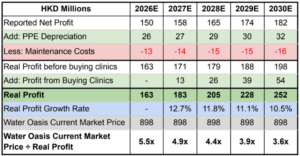
Bilbel bought Water Oasis, a Hong Kong beauty-services group compounding at 14.9% a year since 2002. The float is the point: of HK$1bn of cash, HK$750m is non-refundable prepayment for treatments not yet delivered, and new prepayments fund delivery of the old ones, so the cash stays even if sales fall. The controlling family owns 70%, has paid out 90% of profits as dividends since 2002, and bought back 11.5% of shares. It earns about HK$160m a year against a HK$900m market value, plus HK$170m of investment properties.
Green Dot (GDOT) (mkt cap $757m · 13% below its 52-week high)
Curreen bought Green Dot, a financial company that issues bank-like debit cards at Wal-Mart and other US retailers and had agreed to be acquired by CommerceOne Financial, with a private equity firm taking the fintech and Green Dot Bank merging into CommerceOne. As a result, shareholders receive cash plus shares in the new bank. Curreen’s argument was a deposit-and-loan fit: Green Dot Bank earns good returns on equity because the card business supplies cheap deposits invested in safe, low-yielding securities. In contrast, CommerceOne earns good returns on Alabama business loans without cheap deposits.
The Macro Bros
They might not name individual tickers, but calling the macro correctly is half the work of finding a good trade. What are the macro bros thinking?

The AI capex math
With all the Capex going into data centers, what level of revenue do we need to justify all of this?
Stone Sentinel states the hyperscalers generated a combined $1.67 trillion in revenues last year and asks whether they can generate another 60% of that from AI: “The bar is very high.” It cites Goldman Sachs estimating the hyperscalers would consume roughly 94% of operating cash flow on AI infrastructure before any debt financing.
Bronte puts the same question as a comparison: “$1.8 trillion won’t be paid by consumers. Global streaming revenue is just over $150 billion.” With the OECD’s entire wage bill likely under $40 trillion, Bronte’s point is that the spend requires capturing nearly 10% of it within four or five years.
Deep Sail puts a date on it: Q1-Q2 2027. That’s when the AI lockups expire. The IPO comparison looks benign: Dot-Com IPO liquidity was about $205bn ($460bn in today’s dollars) against roughly $225bn for the AI wave. The real problem is in follow-on offerings: SpaceX sold only 4.5% of its float at IPO versus a traditional ~15%, and assuming Anthropic and OpenAI follow, post-lockup liquidity is 3x the entire Dot-Com bubble and still 50% higher after inflation. Deep Sail’s conclusion: either the market can’t absorb that supply, or other S&P 500 holdings get sold to fund it.
The Warsh Fed
Trump finally got to replace ‘Too Late Powell’. But is Warsh actually hawkish, or is inflation forcing his hand?
Manole reads Warsh as a monetarist in Friedman’s mould and a long-standing critic of the modern Fed, and sets out three themes: lower interest rates to support economic growth, a smaller Federal Reserve balance sheet, and market-based price discovery. The implication: the next cycle turns on money growth rather than the policy rate.
New Thematics
Sometimes you can buy an entire industry on the same thesis. We’re always listening to what gets other PMs excited.

Elder care and housing
| Ticker | Company | Funds | Mkt cap · vs 52wk high |
| SNDA | Sonida Senior Living | Minot Light — bought after the CNL merger | $1.8bn · −16% |
| EXE CN | Extendicare | Jemekk — new position | C$2.9bn · −21% |
| BLDR | Builders FirstSource | Black Bear (top-5), Bonhoeffer, Tapasya | $7.2bn · −56% |
| HWDN LN | Howden Joinery | Colebrooke — bought under 15x trailing earnings | £4.3bn · −19% |
| IBP | Installed Building Products | Giverny — 3.3% weight, −10.5% in the quarter | $6.5bn · −30% |
Sonida Senior Living (SNDA) and Extendicare (EXE CN) (SNDA $1.8bn · 3M +5.6% · YTD +14.5% · 16% below its 52-week high)
Minot Light sees a multi-year upcycle for private-pay senior care as the baby boom generation moves past 80 — the age at which residents generally start moving into facilities — while senior living starts sit near record lows and new projects take three to five years to open. Past 90% occupancy, the high fixed-cost model turns pricing power into operating leverage. Jemekk holds Extendicare as the Canadian equivalent, and Palm Harbour holds LNA Santé on the same demographics.
The housing supply chain (BLDR · HWDN LN · IBP) (BLDR $7.2bn · 3M −12.4% · YTD −35.1% · 56% below its 52-week high | HWDN LN £4.3bn · 19% below its high)
Black Bear holds Builders FirstSource as a top-five position on a durable double-digit normalized FCF yield in a structurally underbuilt US market. Bonhoeffer holds it on US and UK housing-deficit and falling-long-rate logic while flagging near-term weakness. Tapasya underwrites it explicitly on rates normalizing, treating the affordability crisis as the reason for weak share performance rather than a challenge to the thesis.
Colebrooke bought Howden Joinery under 15x trailing earnings when the Iran oil spike pushed out UK rate-cut expectations. Howden raises prices every year into weak markets and expands its margins while doing so, manufactures much of what it sells and captures both margins, and has a depot roll-out offering a decade of visible growth. The named watch item is M&A restraint after the £390m DIY Kitchens deal.
Giverny holds Installed Building Products, which installs fiberglass insulation into new homes, and found the weaker volumes unsurprising. Still, the stock cratered, and it expects management to respond to the lower valuation by buying back stock.
The non-bank lending shift
| Ticker | Company | Funds | Mkt cap · vs 52wk high |
| NAVI | Navient | Gator — at roughly 40% of tangible book value | $899m · −31% |
| AFRM | Affirm Holdings | Optimist — contributed 4.0% on a 78.0% return | $25bn · −20% |
| ENVA | Enova International | Blue Tower — the quarter’s biggest contributor | $5.7bn · −14% |
Navient (NAVI) (mkt cap $899m · 3M +11.7% · YTD −26.5% · 31% below its 52-week high)
Gator Capital notes the One Big Beautiful Bill Act killed the federal Grad PLUS program in summer 2025, ending federal origination of graduate student loans: “We estimate that this change will increase the addressable market for private student lenders by approximately 80%, creating a meaningful long-term growth opportunity for companies such as Navient.”
Financial aid officers are now more open to lenders not previously on their preferred lists, against a federal Direct Loan Program that makes about 90% of all student loans. Navient has shrunk its share count by almost 80% through repurchases, and at roughly 40% of tangible book value the market values the company as though its future is one of perpetual decline. It expects the change to show up in earnings in two to three years.
Affirm (AFRM) and Enova (ENVA) (AFRM $25bn · 3M +0.8% · YTD −0.3% · 20% below its 52-week high | ENVA $5.7bn · 3M +42.0% · YTD +45.9% · 14% below its high)
Optimist added to Affirm during the Q1 correction and argues that BNPL, done properly, is structurally better aligned with the consumer than the revolving credit card it substitutes for; every transaction is underwritten individually at the point of sale; and, at under 6% of US e-commerce, it is in its second inning. It states Affirm’s model is harder to replicate than its rivals’ — Klarna and Afterpay mostly offer roughly 30-day or shorter installments while Affirm’s portfolio loan duration runs about 5.5 months.
Blue Tower expects volatility in Enova until its merger with Grasshopper Bank clears regulatory approval — a deal it believes will be transformative in opening new markets and lowering funding costs.
Bonhoeffer takes the bank side of the same theme, holding Private Bancorp of America, FFB Bancorp and Northeast Bank. Night Watch runs a 14.8% Remitly and Adyen sleeve; Manole holds ICE, CME, HOOD, SCHW and Stripe.
The uranium drawdown
| Ticker | Company | Funds | Mkt cap · vs 52wk high |
| CCJ | Cameco | Capicraft; ROCKLINC — 5.2% of the Partners Fund | $43bn · −27% |
| UROY | Uranium Royalty | Capicraft | $617m · −24% |
| NXE | NexGen Energy | Capicraft; GreenWood; L1 Capital | $6.9bn · −25% |
| U-UN CN | Sprott Physical Uranium Trust | Capicraft | C$8.8bn · −15% |
| GLO CN | Global Atomic | Massif — Niger | C$167m · −45% |
Cameco (CCJ), Uranium Royalty (UROY), NexGen (NXE), Sprott (U-UN CN) (CCJ $43bn · 3M −12.6% · YTD +7.6% · 27% below its 52-week high)
Capicraft attributes the fall from late-February highs — Cameco 23%, Uranium Royalty 40%, NexGen 28%, Sprott 10% — to speculators who entered during the run. It had cut the Creator Fund’s uranium weight from around 9% to 7% during that rally. Its view is unchanged: reliable baseload demand against supply that is slow and expensive to develop. Spot has held near $85 per pound and TradeTech’s long-term price hit a record $97 at the end of June even as the equities were shaken out; the post-1973 build of 170 GW within a decade is its template.
L1 Capital flags NexGen’s 17% fall despite spot uranium rising 1.5%, noting final approvals for the Arrow deposit came in March 2026 and that a four-year build could generate about C$2.8bn of annual EBITDA at US$80/lb against a market capitalization of roughly C$8.8bn. MJG plays it through Namibia, which holds 12% of global uranium supply via Rössing, Husab and Langer Heinrich.