
Quick market update
This week is supposed to be our quarterly fund letter digest, but with all the market volatility, we’d be remiss to skip it.
We’ve been outspokenly bearish on circular financing in AI. We’ve been cautious about the wave of IPOs sucking all the liquidity out of the market. But we also started deploying our cash more recently, expecting a year-end rally. So, we’re definitely giving up a lot of our YTD performance as it all comes tumbling down.
Semi bros are finally figuring out what it’s like to be a commodity bro. Unfortunately, while they are learning an expensive lesson, the value bros get to suffer too.
You may not have been an AI fund on the way up. But on the way down, we’re all AI funds.

Maybe the pods will get redemptions until year-end, and they’ll continue to de-gross as they’re exceeding all their risk limits – not unlike 2018. And maybe we’ll get tax-loss selling on top of that…
Maybe ANT shouldn’t have been greedy by letting 10% of employee shares unlock on day 1? That’s another $26bn of potential sales hitting the market.
Or is it just that Trump no longer has an incentive to pump the market on every down day?
Whatever it is, we’re all playing a positioning game now, not a fundamentals game.
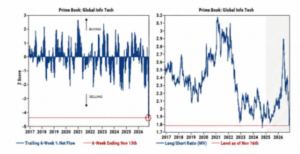
Figure: 6-week net flows fell more than 4 standard deviations below average in GS prime book
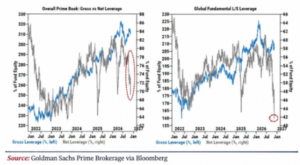
Figure: Net leverage down to April 2025 and March 2026 lows
For any fundamental investor with cash to deploy and a time horizon extending at least to next earnings season, these are fertile hunting grounds.
Even in semis, there are bargains to be found if you believe companies are worth a multiple on normalized earnings, plus 1 or 2 years of retained earnings.
But rather than telling you about our book – you know what we own – this might be a very good time to browse through the most recent hedge fund letters to find new ideas.
Q3 2026 Fund Letters
| No. | Section | Companies and tickers |
| 1 | Spinoffs | Mobility Global (MBGL), Octave Intelligence (OCTV), Strata Critical Medical (SRTA), TriMas (TRS), ADI Global Distribution (ADIG) |
| 2 | The anti-AI trade | Auto Trader (AUTO LN), Rightmove (RMV LN), Research Solutions (RSSS), Klaviyo (KVYO), S&P Global (SPGI), Lincoln Educational (LINC), Universal Technical Institute (UTI) |
| 3 | AI picks and shovels | Hanyang ENG (045100 KS), Rambus (RMBS), Smartoptics (SMOP NO), SK Inc preferred shares (03473K KS) |
| 4 | Housing and Rates | Builders FirstSource (BLDR), QXO (QXO), Fannie Mae (FNMA), Freddie Mac (FMCC), Rocket Companies (RKT), Real Matters (REAL CN) |
| 5 | Long Vol | Intercontinental Exchange (ICE), Cboe Global Markets (CBOE), Azelis (AZE BB), IMCD (IMCD NA) |
| 6 | Energy | Tidewater (TDW), Borr Drilling (BORR), Ashtead Technology (AT/ LN), Valaris (VAL), Noble (NE), Frontline (FRO) |
| 7 | Off-the-Radar Ideas | S-1 (012750 KS), Bank7 (BSVN), Mobia Medical (MOBI), Monument Mining (MMY CN), Master Drilling (MDI SJ), Chien Kuo Construction (5515 TT) |
Spinoffs
- Mobility Global (MBGL) (mkt cap $6.7bn · 3M +14.0% · since listing +7.8% · 13.0% below its 52-week high)
Hinde Group bought Mobility Global (MBGL), the CARFAX business S&P Global spun off in July. The stock is cheap for several reasons: 209m of its 295m shares traded in the first six days, non-deductible amortization weighs on GAAP earnings, the market is applying an AI discount to private, hard-to-get data, and the first quarter posted a small revenue miss.
- Octave Intelligence (OCTV) (mkt cap $5.4bn · 3M +11.6% · since listing −7.8% · 32.5% below its 52-week high)
O’Keefe Stevens bought Octave (OCTV), the industrial software business Hexagon spun off. At about 12x forward earnings, it trades at half the EV/Sales of Autodesk, Bentley, and PTC, which O’Keefe Stevens attributes to a classic orphaned spin. Most of OCTV customers use only one workflow, and those on three or more pay $2m+ a year against $150k, so there is plenty of room to cross-sell.
- Strata Critical Medical (SRTA) (mkt cap $407m · 3M −26.9% · YTD −5.2% · 29.8% below its 52-week high)
Greystone owns Strata Critical Medical (SRTA), which is what was left of Blade Air Mobility once the passenger business went to Joby. It is now the only full-service organ transplant provider and works with over 30% of US transplant centers. The stock trades at 11.6x FY26 EBITDA, against 15x for TransMedics. If management hits its 30% annual EBITDA growth target, Greystone gets to about $14.5 a share by 2031, a 26% IRR.
- TriMas (TRS) (mkt cap $1.30bn · 3M −6.6% · YTD +3.7% · 19.1% below its 52-week high)
Middle Coast added TriMas (TRS) after it sold its aerospace unit, leaving a cheap packaging business trading at 9.2x 2026 EV/EBITDA, with debt fixed at 4.125% until 2029. Activists have already pushed through two sales, and Middle Coast thinks selling what’s left is the obvious next step.
- ADI Global Distribution (ADIG) (mkt cap $619m · 3M −57.6% · since listing −57.3% · 71.1% below its 52-week high)
Greenlight owns ADI Global (ADIG), the security and AV distributor spun out of Resideo. It trades at about 10x 2027 earnings, and Greenlight thinks earnings can double in three years as commercial demand grows, residential steadies and the Snap One savings come through.
The anti-AI trade
- Auto Trader (AUTO LN) (mkt cap £4.1bn · 3M −1.2% · YTD −7.9% · 18.5% below its 52-week high) and Rightmove (RMV LN) (mkt cap £3.8bn · 3M +4.4% · YTD +2.7% · 12.9% below its 52-week high)
Vltava owns Auto Trader (AUTO LN) and Rightmove (RMV LN), the biggest UK car and property portals, and thinks AI will end up helping them. Core margins are about 70%, and users spend 11x more time on it than on the nearest rival. An AI assistant helping someone buy a car or a house still needs the listings, prices, and sellers these sites have.
- Research Solutions (RSSS) (mkt cap $73m · 3M −4.4% · YTD −26.9% · 36.4% below its 52-week high)
Long Cast is sticking with Research Solutions (RSSS) as a large position after the stock fell almost 40%, leaving it at under 2x ARR and 8x trailing EBITDA. Long Cast bets that paywalled content stays valuable even as AI spreads, making a company that sells access to it worth more.
- Klaviyo (KVYO) (mkt cap $6.3bn · 3M +21.3% · YTD −31.5% · 33.3% below its 52-week high)
Meditation says Klaviyo (KVYO) is the cheapest software stock it owns, at 3x 2027 revenue, and sees 2-3x upside. Meditation doesn’t buy the AI worry: getting emails into inboxes is hard enough that few merchants would try to build it themselves, data from their other apps already flows into Klaviyo, and many partners now run it from inside Claude. It expects 26% revenue growth in 2026 and 22% in 2027, without counting any AI revenue.
- S&P Global (SPGI) (mkt cap $127bn · 3M +1.9% · YTD −11.1% · 15.9% below its 52-week high)
Pershing Square, Douglass Winthrop, Jenga, Minotaur and GreensKeeper all own S&P Global (SPGI). Pershing argues AI threatens only a small share of earnings and may even boost demand for curated proprietary data. It supports the strategic review, including a possible separation of CapIQ, which would take the AI worry off the rest of the company. Douglass Winthrop’s point is simpler: AI can’t issue an S&P credit rating or license the S&P 500.
- Lincoln Educational (LINC) (mkt cap $619m · 3M −21.8% · YTD −16.7% · 64.3% below its 52-week high) and Universal Technical Institute (UTI) (mkt cap $946m · 3M −23.2% · YTD −34.3% · 66.6% below its 52-week high)
Our own Kuppy from Praetorian bought Lincoln Educational (LINC) and Universal Technical Institute (UTI) very aggressively in Q3. The shares fell on weak enrollment guidance after AI search tools cut into the Google Search funnel both schools rely on for students. Kuppy thinks AI is the reason to own them: as it eliminates office jobs, millions of workers will need to retrain in the trades. New campuses lose money at first, which hurts profits today, but on his own estimate of 2027 earnings, leaving out the cost of opening new campuses, the stock is trading at about 10x FCF.
AI picks and shovels
- Hanyang ENG (045100 KS)
Palm Harbour likes Hanyang ENG (045100 KS), which installs the ultra-high-purity gas and chemical lines inside chip fabs. Projects stalled in 2024–25 around Korea’s elections and US tariffs, but fabs are coming back online, and the new ones are taller (up to six levels instead of three), meaning more work per fab. The founder’s succession is sorted, the company has canceled treasury shares, and cash and investments make up 46% of the market cap.
- Rambus (RMBS) (mkt cap $7.1bn · 3M −27.3% · YTD −27.8% · 61.9% below its 52-week high)
Jacob Fund started a position in Rambus (RMBS) because of a memory bottleneck: in AI data centers, fast processors often sit waiting on slower memory. MRDIMM, a new type of server memory, doubles transfer speeds without a server redesign, and Jacob thinks the market is underestimating how quickly it will roll out.
- Smartoptics (SMOP NO) (mkt cap NOK 5.2bn · 3M +18.7% · YTD +81.0% · 19.1% below its 52-week high)
Protean Small Cap likes Smartoptics (SMOP NO), the challenger in optical networking. Market leader Ciena (CIEN) is focused on hyperscalers and neglecting Tier 1 telecom operators, and Protean thinks Smartoptics’ product matches or beats Ciena’s at a lower price.
- SK Inc preferred shares (03473K KS) (SK Inc mkt cap ₩2tn · 3M −21.2% · YTD +78.4% · 47.7% below its 52-week high)
Van Der Mandele is a big SK Hynix (000660 KS) bull, with 18.3% of the portfolio in it, and gets its exposure as cheaply as possible by going up the ownership chain. SK Square trades over 40% below the value of its Hynix stake. And SK Inc.’s preference shares are about 27% cheaper than its ordinary shares, partly because Korean families have an inheritance-tax reason to keep voting shares cheap and own fewer of the prefs. Put together, the prefs trade about 83% below the Hynix value behind them, and Van Der Mandele sees 250–300% upside if the discounts shrink to 20–30%.
Housing and Rates
- Builders FirstSource (BLDR) (mkt cap $5.9bn · 3M −21.6% · YTD −46.5% · 58.2% below its 52-week high)
Black Bear, Henchmen, Robotti and Pelican Bay own Builders FirstSource (BLDR). Black Bear sees $9 to $12 a share of normalized free cash flow, a 16% to 21% yield, without needing a sharp fall in mortgage rates. The business is more resilient than it used to be, having moved from commodity lumber into manufactured components and on-site services. Housing supply is tight, and because owners with cheap mortgages aren’t selling, builders using rate buydowns are taking a bigger share of transactions. Giverny is more cautious: labor shortages make BLDR more important to homebuilders, but it sees no catalyst until rates fall.
- QXO (QXO) (mkt cap $10.8bn · 3M −24.9% · YTD −46.4% · 62.5% below its 52-week high)
Patient Capital thinks QXO (QXO), down 61% from its highs as building products sold off on rising rates, is a Brad Jacobs drawdown worth buying. Every big drop at Jacobs’ earlier companies turned into a buying opportunity, and from those lows they compounded at about 40% a year. On $2.20 of potential 2030 EPS, the stock is at 5x; at 25x it would trade in the mid-$50s, a 37% annual gain.
- Fannie Mae (FNMA) and Freddie Mac (FMCC) (FNMA: mkt cap $4.1bn · 3M −44.1% · YTD −67.3% · 71.7% below its 52-week high; FMCC: mkt cap $2.1bn · 3M −43.1% · YTD −67.9% · 72.5% below its 52-week high)
Pershing Square thinks Fannie Mae and Freddie Mac could go up more than 10-fold. At about 1.5x earnings, investors are pricing in politics instead of the business. The two have over $200bn of equity, about 50 times average annual credit losses. The shares are down more than 60% this year as the administration went quiet, but Pershing doesn’t think Republicans will risk handing them to a new administration in 2029.
- Rocket Companies (RKT) (mkt cap $38.8bn · 3M −1.3% · YTD −29.0% · 43.6% below its 52-week high) and Real Matters (REAL CN) (mkt cap C$208m · 3M −43.7% · YTD −51.7% · 62.7% below its 52-week high)
White Falcon has about 10% of its fund in Rocket Companies (RKT) and Real Matters (REAL CN), both close to all-time lows. With Redfin, Rocket Mortgage, and Mr. Cooper under one roof, Rocket spends less to win each customer and keeps taking share. Real Matters matches lenders with local appraisers, and White Falcon doesn’t think AI makes those relationships easy to copy.
Long Vol
- Intercontinental Exchange (ICE) (mkt cap $95.0bn · 3M +5.4% · YTD +5.0% · 6.3% below its 52-week high)
Upslope, Pershing Square and GreensKeeper own Intercontinental Exchange (ICE), and all three think the panic over perpetual futures was overdone. That worry took the stock from about 20x EBIT to 14x, even as ICE posted its 20th straight year of record net revenue in 2025 and average daily volume rose 31%. Pershing sees perpetuals mainly as a tool for leveraged retail speculation, not institutional hedging, and thinks ICE’s partnership with Trade[XYZ], which brings perpetual markets onshore, complements the business. Upslope also thinks mortgage technology is under-earning: it touches about 90% of US mortgages, and 45% of its revenue comes from origination and closing products that recover with housing. At 17x earnings, Pershing calls it a highly discounted price for a franchise compounding earnings at a mid-teens rate.
- CBOE Global Markets (CBOE) (mkt cap $37.3bn · 3M +18.9% · YTD +42.5% · 5.8% below its 52-week high)
Mott thinks options will become an even bigger part of trading, which means more transaction fees for CBOE. The shares dipped in Q2 on worries that betting markets like Kalshi could launch rival products, but Mott doesn’t think they can easily replace CBOE’s listed products.
- Azelis (AZE BB) (mkt cap €2.8bn · 14.1% below its 52-week high) and IMCD (IMCD NA) (mkt cap €6.0bn · 4.9% below its 52-week high)
Night Watch is long Azelis (AZE BB) and IMCD (IMCD NA), Europe’s two big specialty chemical distributors. When chemicals are short, or prices are rising, distributors win. After a three-year bear market spent working off the stock customers built up during Covid, inventories are finally lean just as demand and prices pick up. Faster growth brings higher margins and lower leverage, which frees up money for acquisitions, historically a big part of how these companies create value. Yet both trade at low-teens multiples, against a history well into the 20s. The usual bear case, cheap Chinese supply, hurts chemical makers far more than distributors, since Chinese producers also need local distributors to reach smaller customers. And with oil more expensive, China’s chemical exports are already falling fast.
Energy
- Tidewater (TDW) (mkt cap $3.4bn · 3M −27.6% · YTD +36.6% · 32.1% below its 52-week high)
Black Bear holds Tidewater (TDW), the world’s largest owner of offshore support vessels. New boats are expensive and slow to build, so few are being ordered while older ones retire. Tidewater generated about $350m in free cash flow in 2025, an 8% yield, and Black Bear thinks it could generate $600m to $1.2bn in a more normal market.
- Borr Drilling (BORR) (mkt cap $1.0bn · 3M −24.2% · YTD −15.4% · 48.8% below its 52-week high)
The Insiders Fund holds Borr Drilling (BORR), which runs shallow-water jack-up rigs. It believes the Middle East has proven an unreliable supplier, so buyers will look to offshore oil elsewhere. Insiders, mostly Tor Olav Trøim, have bought over $17m of stock, and new contracts for three rigs run the backlog into 2027.
- Ashtead Technology (AT/ LN) (mkt cap £491m · 3M +75.8% · YTD +96.8% · 0.7% below its 52-week high)
Diranko and Phoenician own Ashtead Technology (AT/ LN). Diranko has stayed away from offshore because oil majors squeeze service companies on price. Still, Ashtead gets around that: it rents sensors and robotic arms for hundreds of dollars a day to contractors whose vessels cost hundreds of thousands a day, a small cost for a critical job. Industry experts told Diranko it is essentially a monopoly in that rental niche, with returns on capital above 20%. With about 10% of a fragmented market, it has plenty of room to consolidate.
- Valaris (VAL) (mkt cap $4.9bn · 3M −19.3% · YTD +40.5% · 38.0% below its 52-week high) and Noble (NE) (mkt cap $5.9bn · 3M −20.6% · YTD +30.0% · 33.2% below its 52-week high)
Masonry owns Valaris (VAL) and Noble (NE) because the offshore rig shortage can’t be fixed quickly. A new rig costs $600m to $1.2bn and takes years to deliver, nobody has ordered a drillship in about a decade, and floating rigs outside harsh-environment markets have fallen from about 280 in 2014 to 150. Once Transocean and Valaris combine, the top three could control about 80% of high-spec rigs. Both stocks still trade well below replacement cost, which Masonry wouldn’t expect mid-cycle.
- Frontline (FRO) (mkt cap $10.1bn · 3M +3.5% · YTD +107.2% · 24.3% below its 52-week high)
Masonry has owned tankers since 2019, and Frontline (FRO) was one of its three biggest winners this quarter. Fighting around Hormuz, the Red Sea and the Black Sea has made ships less productive, but the bigger shift is more crude coming out of the US and Brazil, which means longer trips to Asia. New orders equal over 25% of the fleet, but by the time they arrive, 30% to 40% of the existing ships will be more than 20 years old.
Off-the-Radar Ideas
- S-1 (012750 KS) (mkt cap ₩5tn · 3M +36.7% · YTD +47.9% · 2.4% below its 52-week high)
Terton likes S-1 (012750 KS) for the steady cash from its alarm-monitoring contracts. It trades at about 10x EV/NOPAT, against 21x for SECOM, its largest shareholder, and Terton thinks the reasons are fixable: it sits on too much cash and has never canceled its 11% treasury stake.
- Bank7 (BSVN) (mkt cap $600m · 3M +7.9% · YTD +36.5% · 7.0% below its 52-week high)
Alluvial owns Bank7 (BSVN) for its deal to buy Century, which it is getting well below what a normal sale would cost, even after raising its bid to beat a rival. Management guides to a 25% lift in EPS, but Alluvial thinks that’s conservative given cheaper funding, better yields on Century’s loans, and cost cuts at a badly run bank. It expects run-rate EPS of at least $6.75 to $7.00 and a stock worth $80 or more.
- Mobia Medical (MOBI) (mkt cap $394m · 3M +11.7% · −21.0% since its May 2026 listing · 22.5% below its 52-week high)
Minot Light thinks Mobia Medical (MOBI) fell after its IPO for technical reasons: fast-money funds dumped their allocations, and the market cap dropped below what many long-only funds can buy. Its Vivistim device is the only approved therapy for recovering arm and hand movement after a stroke. Revenue is growing over 50% with gross margins above 80%, and on a normal MedTech multiple, Minot Light sees the shares above $40.
- Monument Mining (MMY CN) (mkt cap C$215m · 3M −41.0% · YTD −49.2% · 60.0% below its 52-week high)
Cedar Creek owns Monument Mining (MMY CN) because it is extremely cheap: a $184m market cap against $110m of cash, no debt, and $69m of earnings over the past year. Net of cash, that’s under 1x earnings. Drilling could extend the Selinsing mine’s six-year life, and a royalty on assets sold to Odyssey Gold could add $20m to $30m of earnings.
- Master Drilling (MDI SJ) (mkt cap R2.1bn · 3M −8.4% · YTD −14.4% · 36.0% below its 52-week high)
Halvio owns Master Drilling (MDI SJ), a global leader in raise-bore drilling for mines, whose backlog has doubled to a record $1bn+ on the back of the precious metals rally, the stock trades at about 4x earnings and 2.3x EV/EBITDA. Halvio blames the Johannesburg listing and the cyclical label, even though revenue has grown in nine of the past ten years.
- Chien Kuo Construction (5515 TT) (mkt cap NT$8.1bn · 3M −27.9% · YTD +11.5% · 28.8% below its 52-week high)
Stone Sentinel sees Chien Kuo (5515 TT) as a builder with an insurance-style float. Customers pay deposits before work starts, and Chien Kuo invests them in bonds and money market funds. Since Chairman Wu took over in 2019, ROE has gone from 1% to 18%. Even after haircuts, the portfolio is worth about 80% of the market cap, so the construction business is valued at just 4.1x earnings. With a 6.5% dividend yield, Stone Sentinel expects a high-teens to 20% annual return over three years.